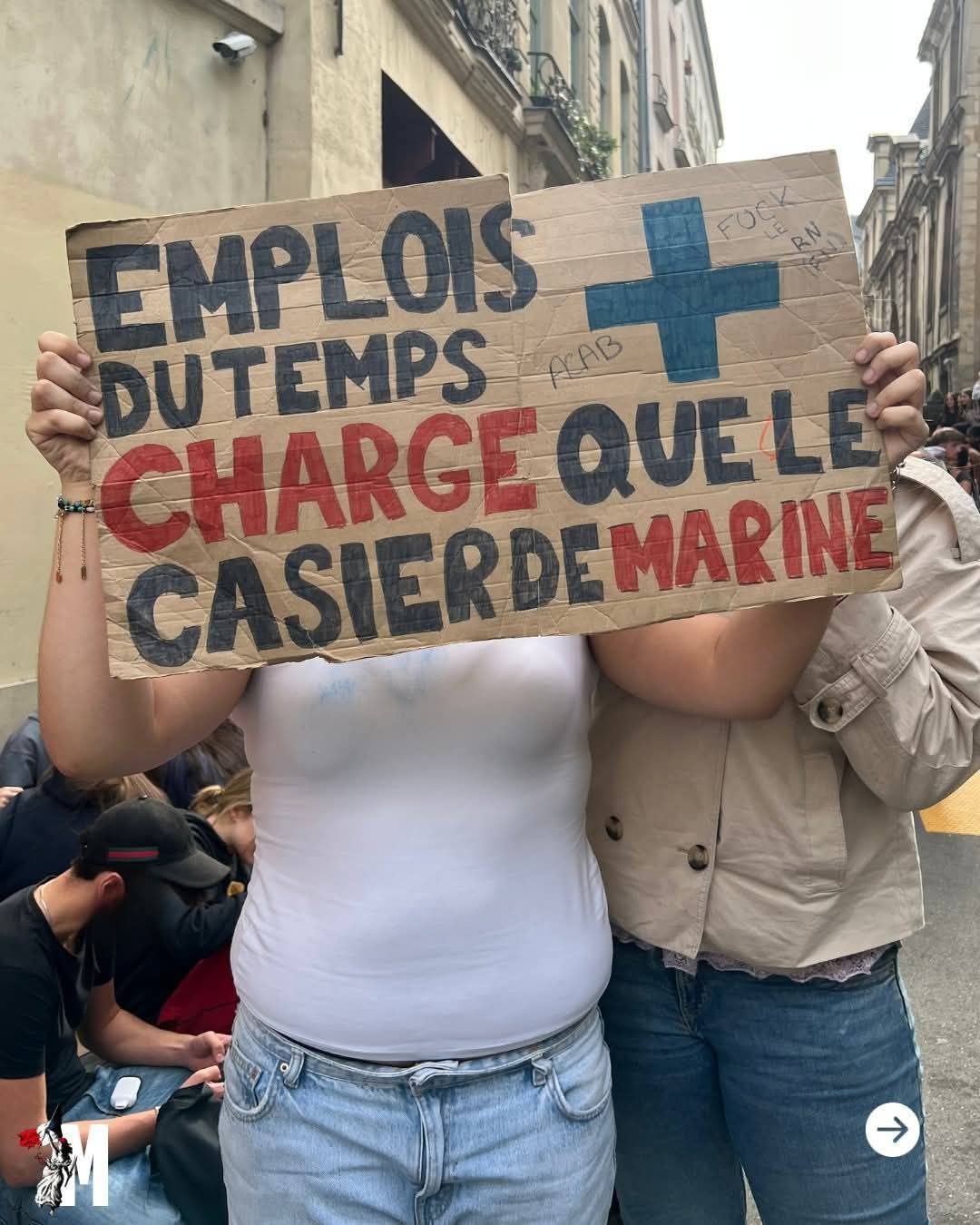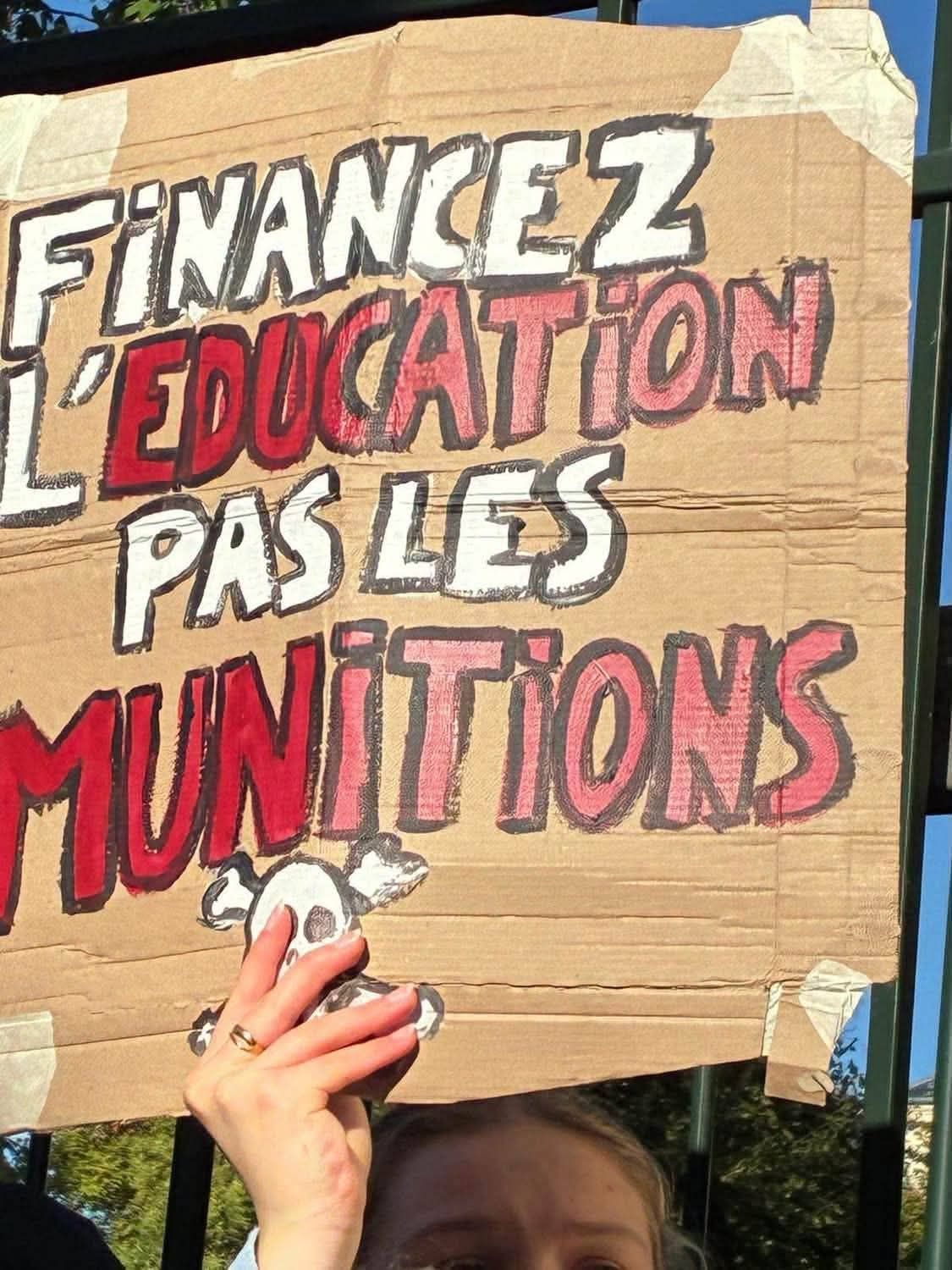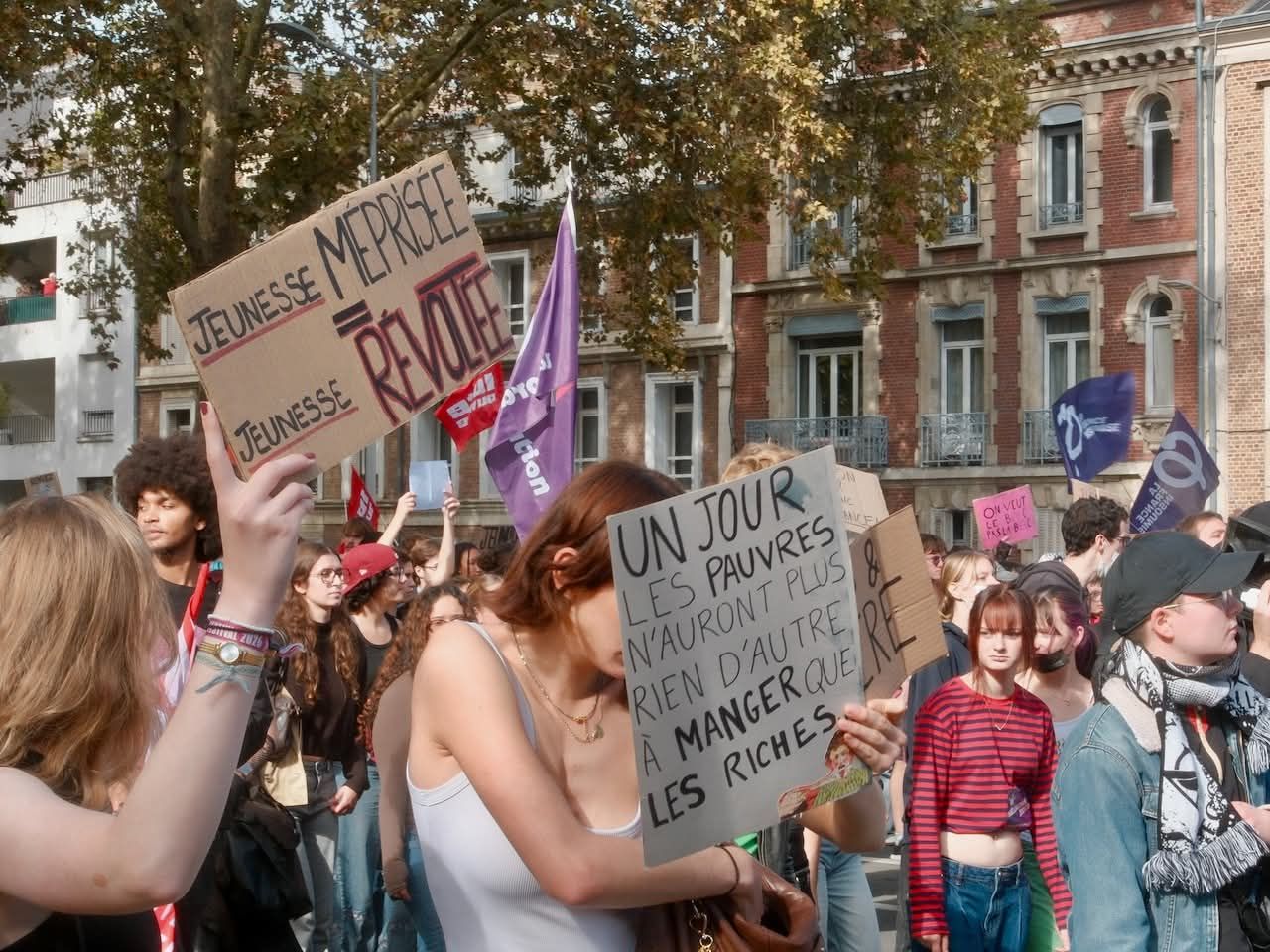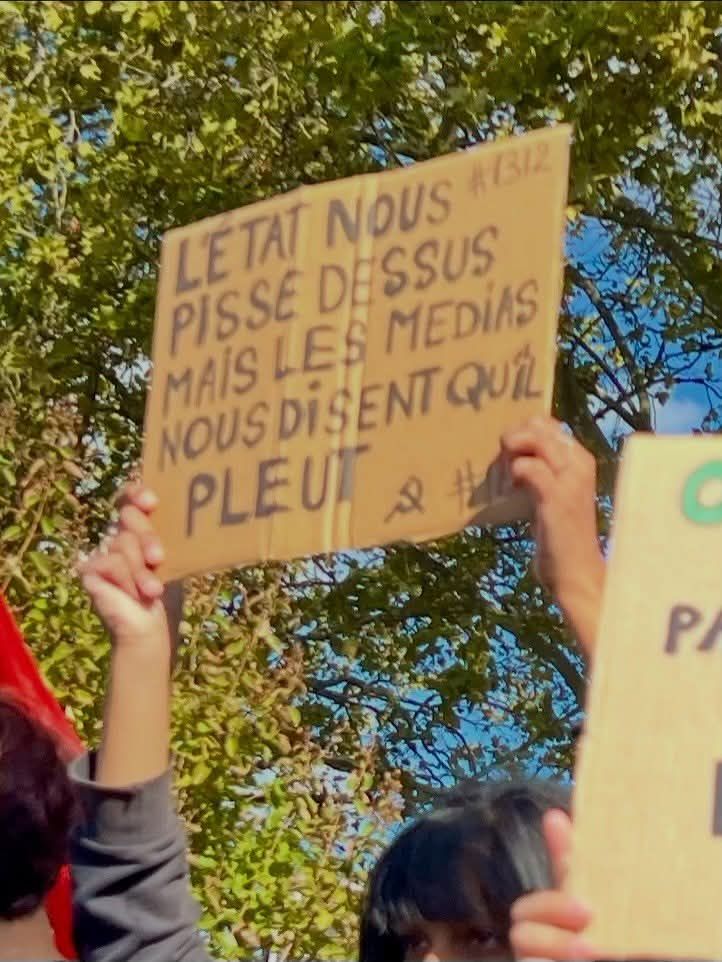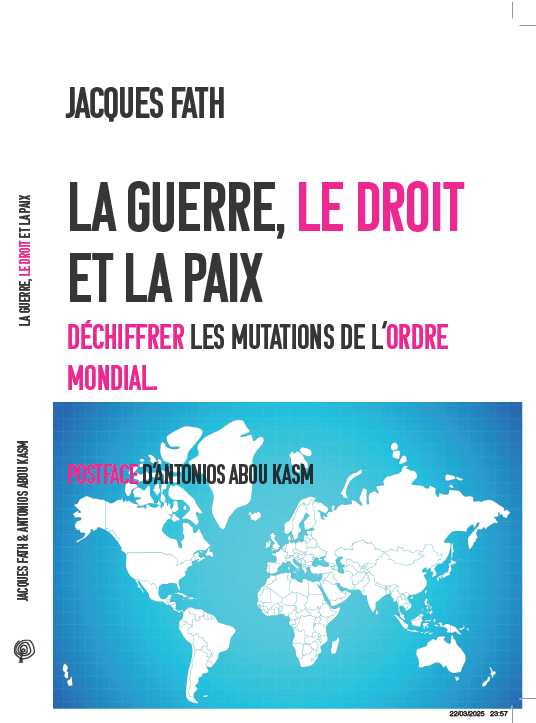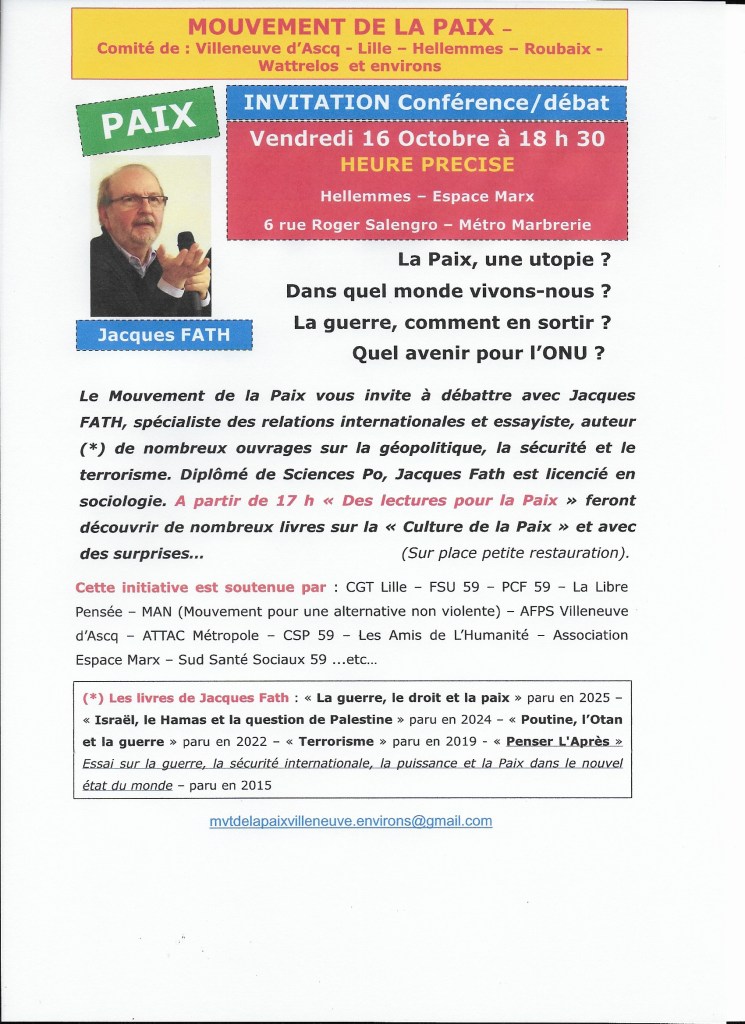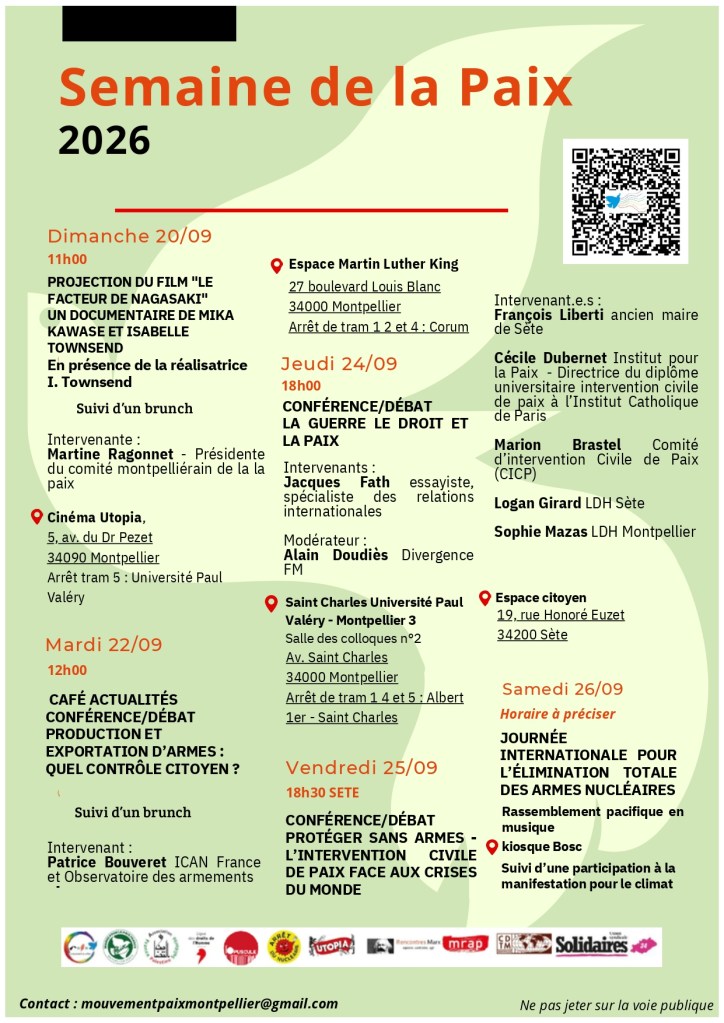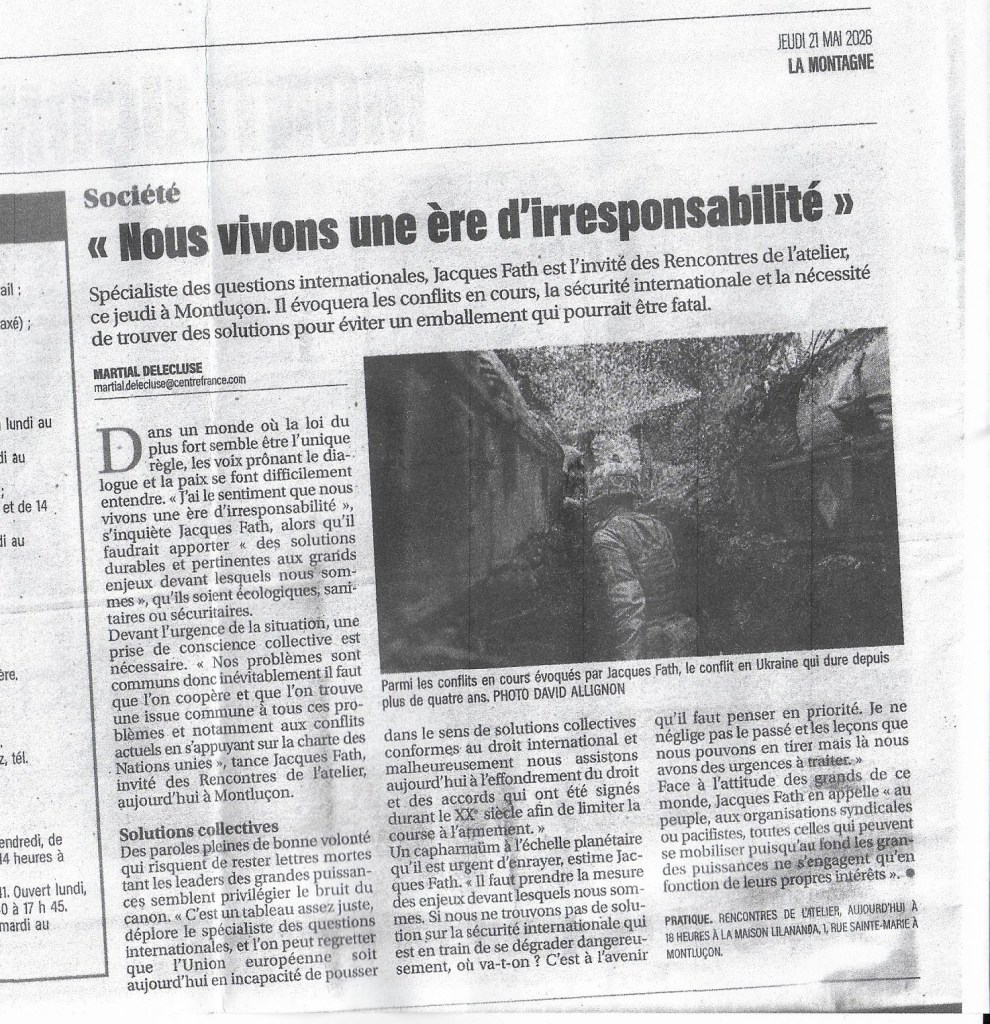


Je publie ici l’intégralité de mon intervention liminaire à une conférence-débat organisée par le Mouvement de la paix à Lille-Hellemmes, Salle Espace Marx, le 16 octobre 2026 : La paix, une utopie? Dans quel monde vivons-nous? La guerre, comment en sortir? Quel avenir pour l’ONU ?
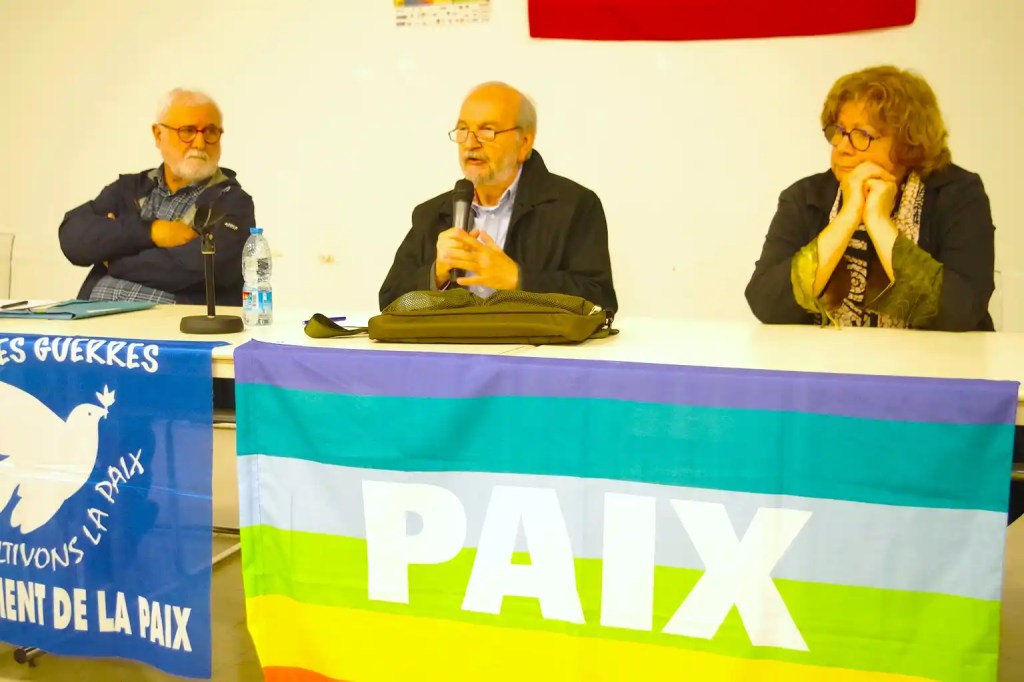
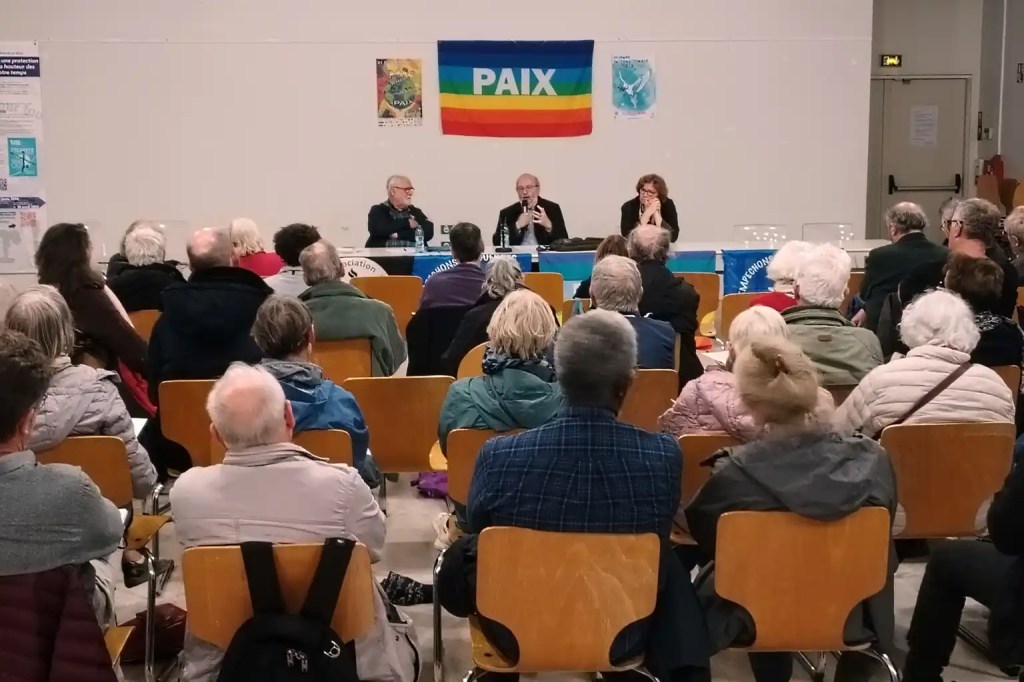
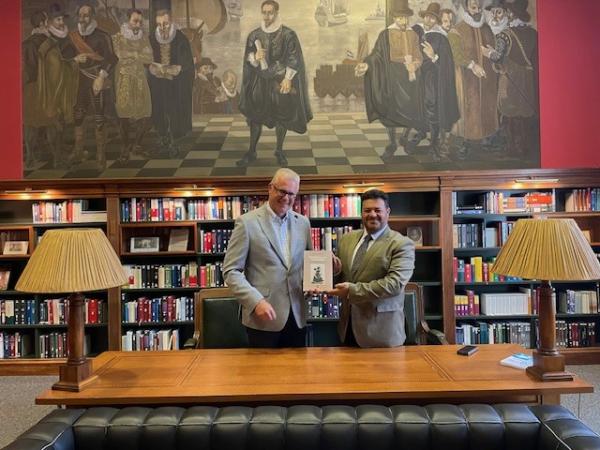
A la tribune : Jean-Pierre Tonder et Dominique Guérandel, responsable du Comité local.
Je souhaite introduire notre discussion à partir de trois questions :
Dans quel monde vivons-nous ? Quel est le sens des mutations en cours ? Comment penser et agir dans un tel contexte ?
1) Dans quel monde vivons-nous ?
Les événements mondiaux nous montrent un monde en mutations accélérées. Qu’est-ce que cela veut dire ?
On peux commencer par trois constats…
1) La concordance des temps de guerre et de tensions politico-militaires en Europe, au Proche-Orient, en Asie, avec des situations durables de férocité conflictuelle en Afrique montrent un effondrement de tous les dispositifs de régulation ayant caractérisé les relations internationales depuis 1945 avec la création de l’ONU. Cette montée des hostilités politiques et des affrontements traduit l’affirmation des logiques de puissance et le primat de la force dans les relations internationales. On voit qu’un ordre international se décompose ainsi dans le chaos sans qu’un autre ordre vienne le remplacer. On constate ainsi une déliquescence profonde des conditions de sécurité et de vie pour les peuples n’obtiennent sans véritable réponse de responsabilité politique à la hauteur de l’enjeu.
2) Les dures périodes de canicule, de sécheresse, les mégafeux sans précédents… nous rappellent l’accélération du changement climatique, ses effets catastrophiques, et, de facto, une impuissance persistante à en changer radicalement le cours dans le contexte actuel, malgré l’urgence du défi, et malgré les progrès évidents d’une conscience écologique.
3) Le développement de très hautes technologies, en particulier l’intelligence artificielle, poussent à des mutations sociales, économiques, politiques de très grande portée. Elles pèsent dans les rapports de forces et elles changent la donne internationale. Elles alimentent des compétitions géopolitiques majeures. Elles provoquent des transformations de la guerre elle-même. On le voit en Ukraine et au Proche-Orient. Et des interrogations très sérieuses se posent quant à la maîtrise de cette technologie, au contrôle de son usage dans l’intérêt des sociétés et du monde, y compris dans les pays du Sud.
A partir de ces trois constats, on voit à quel point l’incertitude, le risque permanent de situations hors de contrôle dominent et déterminent une trajectoire inquiétante de l’évolution du monde. Nous vivons une ère de chaos grandissant.
Dans ce monde global, on comprend bien que la sécurité des peuples et la paix dépendent de la façon dont les grands défis planétaires seront, ou pas, surmontés.
A l’évidence, nous sommes devant une multiplicité d’insécurités majeures. Et on comprend que les conflits et les guerres ne sont pas les seules sources d’une insécurité humaine liée au système capitaliste. Nous sommes dans une crise systémique. Mais pas seulement…J’y reviendrai.
Dans ce contexte, les tensions, les guerres et les logiques de puissance se connectent et se nourrissent de la course aux armements, y compris nucléaire, dans des processus de militarisation des économies, des politiques et des esprits. Avec de plus en plus de pressions idéologiques liées aux extrêmes droites et aux nationalismes qui tendent à progresser sur tous les continents…
Alors, dans un tel contexte, peut-on affirmer que nous allons vers la guerre ? Beaucoup l’affirment et fixent même un horizon : 2030. Mais il faut discerner ce qui ressort du discours idéologique et les réalités. Un grand affrontement militaire conventionnel en Europe pourrait conduire à une guerre nucléaire. Nous ne sommes pas à la veille d’une telle perspective. Personne ne peut envisager cela sereinement. Il est clair, cependant, que la guerre en Ukraine, dans sa vraie dimension qui est celle d’un conflit d’origine OTAN/Russie sur le champ de l’État ukrainien, ne va pas aisément s’apaiser et finir. Mais ce que l’on appelle la « guerre hybride » ou les affrontements de « zone grise », c’est à dire les confrontations de puissance en dessous du niveau proprement militaire, vont continuer. Ces affrontements ont leurs propres « mécaniques », leurs conséquences imprévisibles, leurs possibles engrenages non maîtrisés… et cela peut conduire à des situations d’impasses périlleuses. On peut dire qu’il n’y a pas aujourd’hui de menace militaire majeure attestée sur la France et sur l’Europe, mais l’exacerbation des contradictions de puissance dans le monde constitue un risque objectif. Il est donc nécessaire de privilégier la diplomatie et de récuser les logiques de force et de dissuasion qui poussent à l’escalade. Et plus que cela, il y a un besoin urgent de refondation d’un ordre international de sécurité collective.
La guerre, comme la paix sont des constructions sociales et politiques. En tous les cas, la guerre n’est pas un invariant de la nature humaine, ni un destin inéluctable comme beaucoup tentent de le faire croire. Il faut sortir de l’idéologie. C’est ce que j’explique dans mon livre à partir de l’apport de spécialistes de la préhistoire sur les origines de la guerre (j’y reviendrai là aussi). Ce qui « fait » la guerre c’est le rapport social, pas un soi-disant instinct de violence des êtres humains… même si la consternante capacité de ces derniers à produire de la violence, évidemment, n’est pas à démontrer.
Le capitalisme, en particulier au 20è siècle a porté la guerre à des sommets, dans des montées aux extrêmes, poussées par les technologies, par les rivalités de puissance, par les idéologies nazies et fascistes. Le capitalisme a d’ailleurs porté les moyens de la puissance à un tel niveau de létalité et de capacité destructive qu’une très grande guerre de portée mondiale est devenue une éventualité maintenant difficile à imaginer. Mais toujours possible…
Et puis, dans un contexte où les très hautes technologies, notamment l’IA, changent la société et les rapports mondiaux, on voit à quel point quelques grands groupes technologiques, quelques acteurs puissants liés au militaire, en particulier aux États-Unis, dominent et dirigent une révolution numérique de très grande portée, catalysant d’immenses profits, dans des contextes géopolitiques de vives tensions et compétitions. L’enjeu pour l’avenir est très élevé. La vigilance pour la paix et la démocratie est impérative.
2) Quel est le sens des mutations en cours ?
Il faut d’abord rappeler pourquoi a été mis en place, en 1945, ce que l’on appelle l’ordre international libéral. Cet ordre fut largement le fruit de la vision américaine des relations internationales constituée en particulier sur l’exigence du système libéral lié au capitalisme, sur l’hégémonie occidentale, sur le rejet du colonialisme au Sud et des dictatures. On sort, en effet, de la Seconde Guerre mondiale. Il fallait nécessairement répondre aux aspirations des peuples et repenser sur quelles valeurs, et sur quelles normes et pratiques un nouveau système international devait s’installer.
On observera au passage une contradiction entre l’origine de cet ordre international libéral, et l’histoire même de la construction coloniale et impérialiste des États-Unis d’Amérique, dans des pratiques de conquêtes criminelles et génocidaires vis à vis de la population amérindienne. Ce que l’on appelle civilisation… c’est aussi une histoire très contradictoire. Mais, après la Seconde guerre mondiale, l’esprit qui a contribué à générer cet ordre international libéral et la création de l’ONU, fut déterminant dans l’installation d’un système qui interdit le recours à la force (dans des conditions liées à la légitime défense), qui privilégie l’exigence de la sécurité collective, du multilatéralisme, du règlement politique des conflits, de la diplomatie.
Ce système devait être égalitaire et universel… mais les fondateurs de l’ONU ont choisi de ménager une contradiction entre l’égalité des acteurs dans le multilatéralisme, d’une part, et les logiques de puissance, d’autre part. En effet, la Charte installe au Conseil de sécurité un statut privilégié pour 5 membres qualifiés de « permanents », et disposant de prérogatives décisionnelles particulières que les autres n’ont pas. Malgré cette contradiction initiale, l’installation d’un système international centré sur les Nations Unies a constitué un précédent historique… qu’il faudrait aujourd’hui dépasser ou refonder dans l’égalité, en tenant compte en particulier des exigences montantes au Sud…
Ce qu’il faut aussi comprendre dans la construction de cet ordre, c’est l’histoire longue qui l’a précédée. En Europe l’idée de pratiques de sécurité collective et de normes visant à limiter le recours à la guerre a progressé dans la longue durée, au moins depuis le 17è siècle, pour aboutir à la création du système des Nations Unies en 1945. On voit que ces processus lents sont cependant restés, pour l’essentiel, aux mains des plus puissants. C’est la puissance qui, alors, définit essentiellement les règles fondant les relations internationales.
Bien sûr, aujourd’hui, il n’est pas faux d’affirmer, dans une formule maintenant banalisée, l’impuissance de la puissance. Avec la puissance, en effet, les guerres n’apportent pas de victoire en tant qu’achèvement ou règlement politique. Et les conflits, dans leur complexité sociale et leur charge politique, n’obtiennent pas de solution durable… Mais la puissance n’a jamais eu la « vocation » de moteur possible à la solution des problèmes. On le voit aujourd’hui au Proche-Orient ou en Ukraine. La puissance, au contraire, est à l’origine de ces problèmes. Elle les produit. Elle les entretient. Elle contribue à remodeler l’ordre international et les hiérarchies pour les plus puissants. Elle est même à la source de la démesure, ce que l’on appelle l’hubris. Il me semble que c’est d’abord cela qu’il faut souligner, parce que la puissance constitue le paradigme directeur nocif et désastreux des politiques et des stratégies mises en œuvre, et des échecs stratégiques majeurs enregistrés. C’est le cas au Proche-Orient et en Ukraine où les acteurs dominants (États-Unis ou Russie) ne parviennent pas à réaliser leurs ambitions stratégiques.
L’idée et la conception d’un système de sécurité collective, c’est donc le fruit de plusieurs siècles de guerres de plus en plus dévastatrices et meurtrières… et de laborieuses tentatives de régulations. Il a fallu la Première Guerre mondiale, puis la seconde, soit un double cataclysme avec quelque 80 millions de morts, pour que l’on décide d’imposer des limites au recours à la force. Jusqu’à interdire celui-ci par la Charte des Nations Unies, en 1945. 80 ans plus tard, tout cela est en pleine décomposition. Il reste qu’une démonstration a été faite : on peut transformer les relations internationales à condition d’en faire un choix d’action politique dans une tout autre vision du monde.
Il est cependant consternant de voir à quelle vitesse, et dans quelle ampleur, ce qui a été difficilement construit durant quelques siècles… et après 1945 durant la Guerre froide, se voit maintenant littéralement détruit aux yeux de tous. Sans que cette mutation dangereuse ne soit prise en compte avec le sens des responsabilités qui devraient pourtant s’imposer. La décomposition avancée du système mis en place après la Seconde Guerre mondiale désintègre tout : le droit, les pratiques établies, les institutions, l’ONU elle-même, le fonctionnement du multilatéralisme et de la sécurité collective, les traités de limitation et de contrôle des armements et de désarmement. Cet effondrement touche l’ensemble des acquis utiles pour la régulation des relations internationales. Par exemple, il n’y a plus aujourd’hui de traité russo-américain de limitation sur les armes nucléaires. Et la crédibilité du TNP est singulièrement affaiblie. Mais une large majorité d’États, principalement du Sud, ont pu imposer l’adoption du Traité d’interdiction des armes nucléaires, signé ou ratifié aujourd’hui par 101 pays, soit une majorité mondiale d’États. Il y a là un enjeu essentiel de sécurité et de paix, alors que tous les pays dotés de l’arme nucléaire renforcent et modernisent leurs arsenaux. Y compris la France qui veut voir ses armes nucléaires jouer un rôle dans le cadre d’une coopération opérationnelle pour la défense en Europe.
Le processus de dépeçage du multilatéralisme a commencé dans l’après Guerre froide, surtout dès les débuts des années 2000, c’est à dire avant Trump, mais brutalement accéléré par celui-ci. Les logiques de puissance et de compétition s’imposent dans un système international sans règles. Au point où l’on peut se demander si les mots de système et d’ordre ont encore un sens. Un monde sans règles c’est la promesse du chaos. On peut dire que nous y sommes.
Il faut donc poser la question de la responsabilité. Peut-on laisser faire ce processus d’effondrement sans réagir ? S’il n’ y a plus de droit, plus de normes ou pratiques acceptées, et de volontés communes… alors, tout devient possible, y compris le pire. Et comment peut-on, dans un tel contexte, affronter correctement les grands défis planétaires ? Ces défis globaux appellent des réponses de responsabilité collective puisque les problèmes sont communs… Pourtant, dans le contexte actuel seuls comptent l’unilatéralisme politique, la sécurité nationale qui pousse à la défiance et aux escalades, et plus globalement les logiques impérialistes.
Nous sommes bien dans une crise existentielle de l’ordre international installé en 1945. Mais la période que nous vivons constitue aussi une rupture ou un basculement de l’histoire beaucoup plus important.
Il faut comprendre ce qu’est la guerre dans l’histoire et dans la longue durée. Et comment cette pratique sociale et politique de la guerre se développe spécifiquement avec la cristallisation, à l’âge du bronze (de 2300 à 800 avant notre ère), des éléments économiques, techniques, sociaux et politiques essentiels de ce que l’on appelle notre civilisation. Mais cette civilisation est aujourd’hui menacée dans son existence même avec la capacité acquise de sa destruction totale par l’usage éventuel de l’arme nucléaire, dans des contextes où les très hautes technologies de l’armement aggravent encore les risques. Et simultanément notre civilisation est aussi menacée de catastrophe écologique en raison du mode de croissance dominant, de l’épuisement de certaines ressources, de pollutions massives dans le contexte du réchauffement climatique. La soutenabilité sociale et écologique est donc aussi au cœur des problèmes.
Nous sommes donc fondés à penser que l’on arrive au bout d’un certain mode de développement et au bout d’un certain mode de pensée. Ce sont d’ailleurs les fondements mêmes de la puissance, donc le militaire, les technologies, l’économie, le politique… qui sont aujourd’hui au moins questionnés sinon mis en cause dans cette crise anthropologique qui touche au sens et à l’existence de notre humanité.
3) Comment penser et agir dans un tel contexte ?
Nous basculons dans un monde d’incertitudes. Un monde d’accélérations et de grands défis non maîtrisés. Un monde dans lequel les possibilités de nouvelles grandes guerres ou de chaos durable sont réelles. Les hautes technologies et les espaces nouveaux de la conflictualité et de la guerre ouvrent sur des risques inédits avec des problématiques sociales, morales et philosophiques… pour l’instant sans réponses.
Le philosophe allemand Günther Anders a posé la question suivante (L’obsolescence de l’homme – 1956) : « l’homme est-il à la hauteur des technologies qu’il produit ? » On pourrait ajouter aujourd’hui : est-il à la hauteur des défis planétaires critiques qu’il a lui-même engendrés ? Le risque de perte de contrôle ne doit pas être sous-estimé. Ce risque existe à la fois dans la guerre, notamment face au danger nucléaire, ou bien quant aux enjeux du réchauffement climatique. Il existe aussi quant aux défis de la maîtrise sociale des très hautes technologies pour l’avenir des sociétés et pour la sécurité internationale.
Comment penser et construire un futur d’humanité, de sécurité et de paix sans mesurer le futur que l’on est en train de réellement préparer ? Cette trajectoire redoutable des relations internationales pose une question fondamentale. En effet, ce qui caractérise notre humanité, c’est en particulier notre conscience et notre capacité à nous projeter dans l’avenir. C’est notre capacité à penser cet avenir. N’est-il pas temps de poser la question de l’indispensable maîtrise de notre futur comme une question politique d’actualité ? Il y a un autre monde à construire.
Ce qui signifie d’abord un autre ordre à installer. C’est d’ailleurs ce que pourrait signifier la posture des BRICS, dans le contexte actuel assez divisés, et de ce que l’on nomme le Sud global. De grandes questions sont donc posées. J’en cite seulement trois.
Première question. Comment être au monde aujourd’hui ? Ou formulé autrement, est-il acceptable qu’au 21è siècle, après les catastrophes du siècle précédent, l’histoire puisse encore s’écrire par la guerre ? Il faut nécessairement mettre en cause la puissance et la force comme référents politiques primordiaux. La puissance n’est pas seulement un ensemble de capacités. C’est aussi une visée et les intentions que l’on peut nourrir avec elle. Il est nécessaire de briser sa centralité politique et d’apporter une réponse de rupture sur l’éthique, sur la vision du monde, sur les institutions et sur le politique. Notamment sur la démocratie qui est un moyen de résistance dans la crise systémique. Toutes les luttes au quotidien peuvent peser sur la voie des ruptures nécessaires en redonnant du sens et de la hauteur à l’action politique. C’est à dire sur des valeurs sociales, d’égalité, d’universalité et d’humanité. Je crois que le tragique 20ème siècle est un moment historique d’avertissement quant au sens de l’humanité et au monde que nous voulons. Il nous faut donc revenir à l’essentiel par les valeurs, par le politique et par le concret.
Deuxième question. Il faut faire descendre la guerre de son piédestal idéologique. Et en finir avec l’idée de la guerre comme mode de régulation inéluctable des relations internationales. Celles-ci peuvent et doivent être conduites autrement. C’est possible. C’est le sens de la Charte de l’ONU. Il est donc indispensable de relégitimer la nécessité impérieuse d’un ordre international fondé sur le droit pour faire dominer un mode de conduite égalitaire et universel des relations internationales. Un ordre de sécurité collective, et de responsabilité collective. Un ordre qui soit ainsi un effort permanent pour réduire les facteurs de tensions, de confrontations afin d’ouvrir les conditions du désarmement et d’une paix durable.
Il s’agit là d’une question politique qui doit avoir des déclinaisons concrètes. Les autorités françaises et européennes doivent être rappelées à leur responsabilité, et mises devant leur contradiction permanente entre le discours et les actes. Il s’agit aussi de s’appuyer sur le système des Nations Unies comme un outil au service des peuples, comme le cœur d’un ordre international à reconstruire, à refonder en tant qu’exigence prioritaire. La question de la réforme de l’ONU est posée, pour l’instant sans réponse… s’il y en a une dans le contexte d’aujourd’hui. Il faut enfin montrer la nocivité des discours et des conceptions politiques qui entretiennent les logiques de puissances et le primat de la force, ou les formes actuelles des réalités impérialistes. Dans ces conceptions il y a la dissuasion, la sécurité nationale, la préparation, qualifiée de « nécessaire », à la guerre… Mais se préparer à la guerre, s’est déjà s’inscrire dans la guerre. C’est un choix politique et de posture stratégique.
Il faut donc affirmer l’exigence de la responsabilité collective comme paradigme fondamental puisque, pour les peuples, les menaces et les risques sont communs. La question de la responsabilité est ainsi posée avec force devant l’ampleur inédite des problèmes mondiaux à résoudre. Par exemple les problèmes majeurs du développement ou de l’insécurité alimentaire au Sud… dont on parle si peu.
Troisième question. Sur la méthode. Il est nécessaire d’insérer la réflexion et l’action dans un contexte historique – il n’y a pas de conflits sans histoire. Dans chaque conflit il y a les origines, les causes, les responsabilités. Beaucoup veulent politiquement écarter ou instrumentaliser cette réalité complexe. Vous vous souvenez, par exemple, d’un débat opposant unilatéralement les responsabilités respectives dans la guerre en Ukraine… alors qu’elles se conjuguent. D’une part, la responsabilité de la Russie qui, effectivement, déclenche la guerre, une guerre meurtrière, contre tout le droit international et la Charte des Nations Unies. C’est la logique de puissance russe. D’autre part, la responsabilité des puissances occidentales qui ont interprété l’effondrement de l’URSS comme une victoire permettant de projeter l’ascendance stratégique de l’Alliance atlantique jusqu’aux frontière de la Russie. Après l’effondrement de l’URSS, les États-Unis ont en effet considéré que dans le monde qui s’ouvre ils peuvent agir totalement à leur guise. La Guerre du Golfe leur permit d’ailleurs de s’affirmer comme la seule grande puissance dominatrice. C’est ici la logique de puissance américaine et otanienne.
Une contextualisation raisonnée est donc indispensable. En vérité, le problème posé fut d’abord celui de la carence d’une réponse à la hauteur du basculement géopolitique intervenu avec la fin de la guerre froide. Il fallait, dans un tel contexte, redéfinir collectivement et complètement un nouvel ordre international et un nouvel ordre de sécurité en Europe et dans le monde. Quand le monde bascule, il faut être à la hauteur de l’événement qui change l’histoire. Cette carence politique majeure a probablement signé le tout début de la décomposition actuelle du système international et de la sécurité. Le politique, c’est cela aussi : comment, à tout moment, être à la hauteur des événements et des enjeux pour penser l’avenir.
En conclusion très rapide, je voudrais souligner que nous vivons une triple crise fondamentale. Celle du rapport social. Celle du rapport écologique. Et celle de la pensée politique alors que nous avons tellement besoin d’une nouvelle vision de l’avenir et du monde. Cela nous conduit à quelques exigences politiques fortes qui n’épuisent pas le sujet, mais qui sont urgentes pour les relations internationales.
– D’abord l’exigence de la responsabilité parce qu’il y a une obligation politique, en particulier pour tous les pouvoirs, à se considérer comme comptable de l’avenir.
– Ensuite l’exigence du droit parce qu’il faut des règles de comportement.
– Enfin, l’exigence du multilatéralisme contre les logiques et la hiérarchie des puissances.
Ces 3 exigences rappellent ce qu’il y a d’essentiel immédiatement dans les relations internationales : la responsabilité des acteurs, la maîtrise des situations et une vision du futur. C’est un minimum.
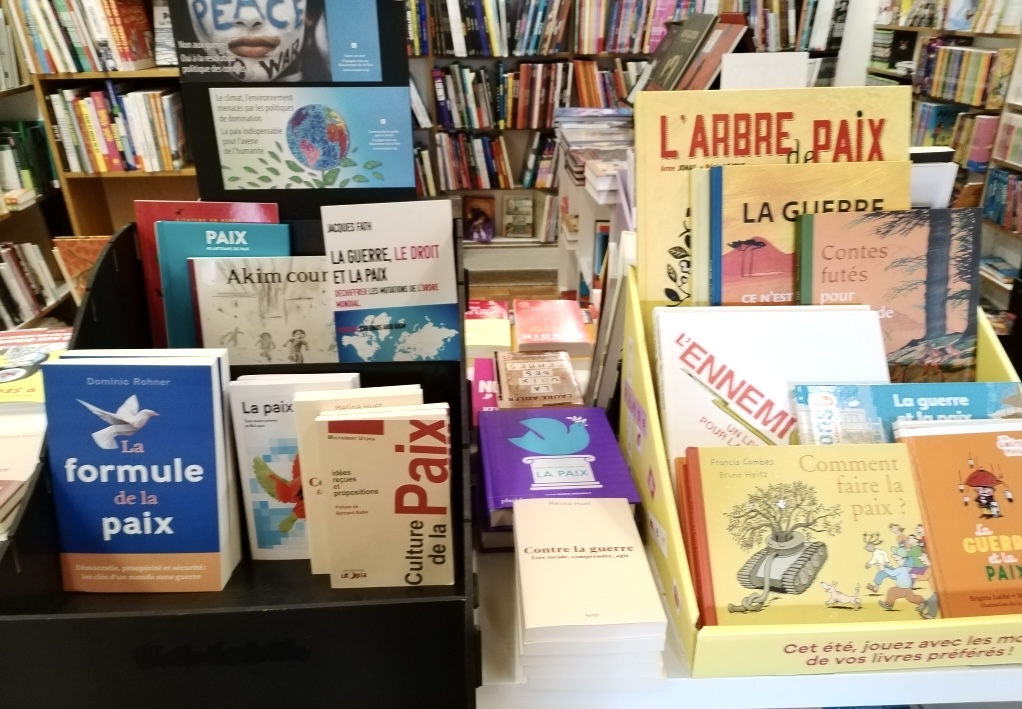
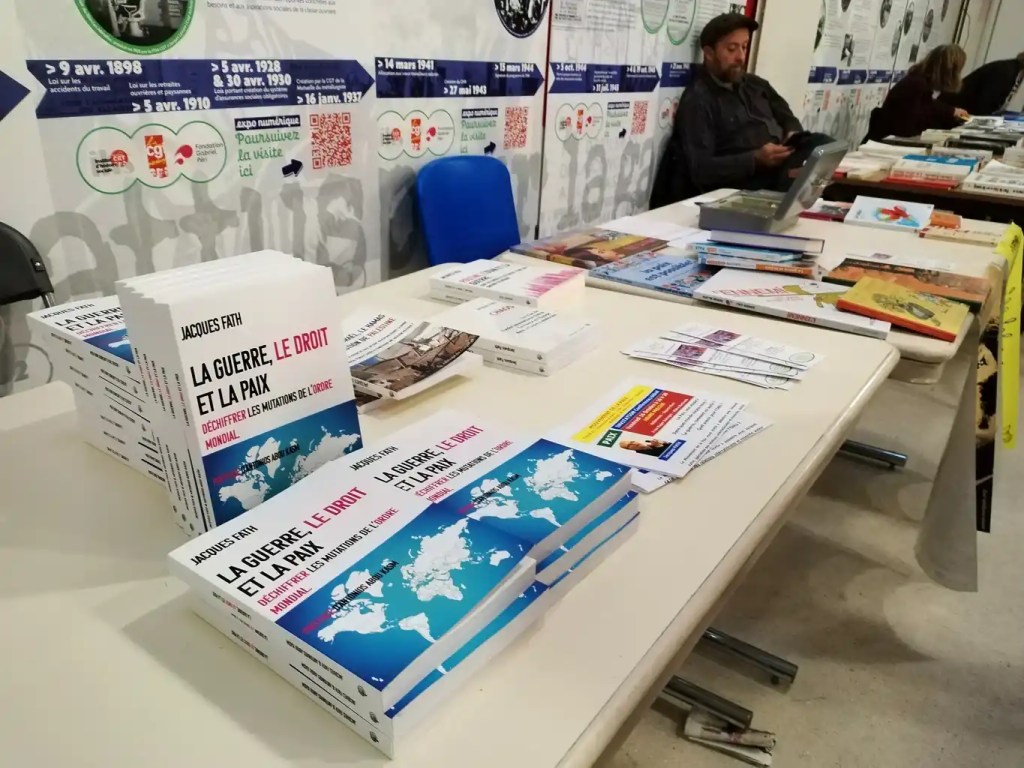
La librairie « Italiques » à Lille-Hellemmes a consacré sa vitrine au thème de la paix…